Rescue & Outreach
Field teams locate abandoned and neglected individuals across South Indian streets, footpaths, bus stands, and forgotten corners. We return, we earn trust, and when they are ready, we bring them in.


Compassion without boundaries
We find the forgotten, care for the abandoned,
and restore dignity to those who have nowhere else to turn.
I · Manifesto
In every city, on every roadside, there are people who have slipped out of sight. The elderly, abandoned by the families they raised. The mentally ill, untreated and alone. The homeless, sleeping where they fell.
Karuna does not begin with charity. It begins with the simple act of seeing. Of stopping when others walk past. Of asking a name. Of returning the next day. We believe that dignity is not given — it is restored. And it is restored not through grand gestures, but through patient, daily care: a meal, a haircut, a clean shirt, a place to sleep, a hand on the shoulder.
What follows is the quiet work of a movement based in South India — and the lives it has touched.
II · The Work
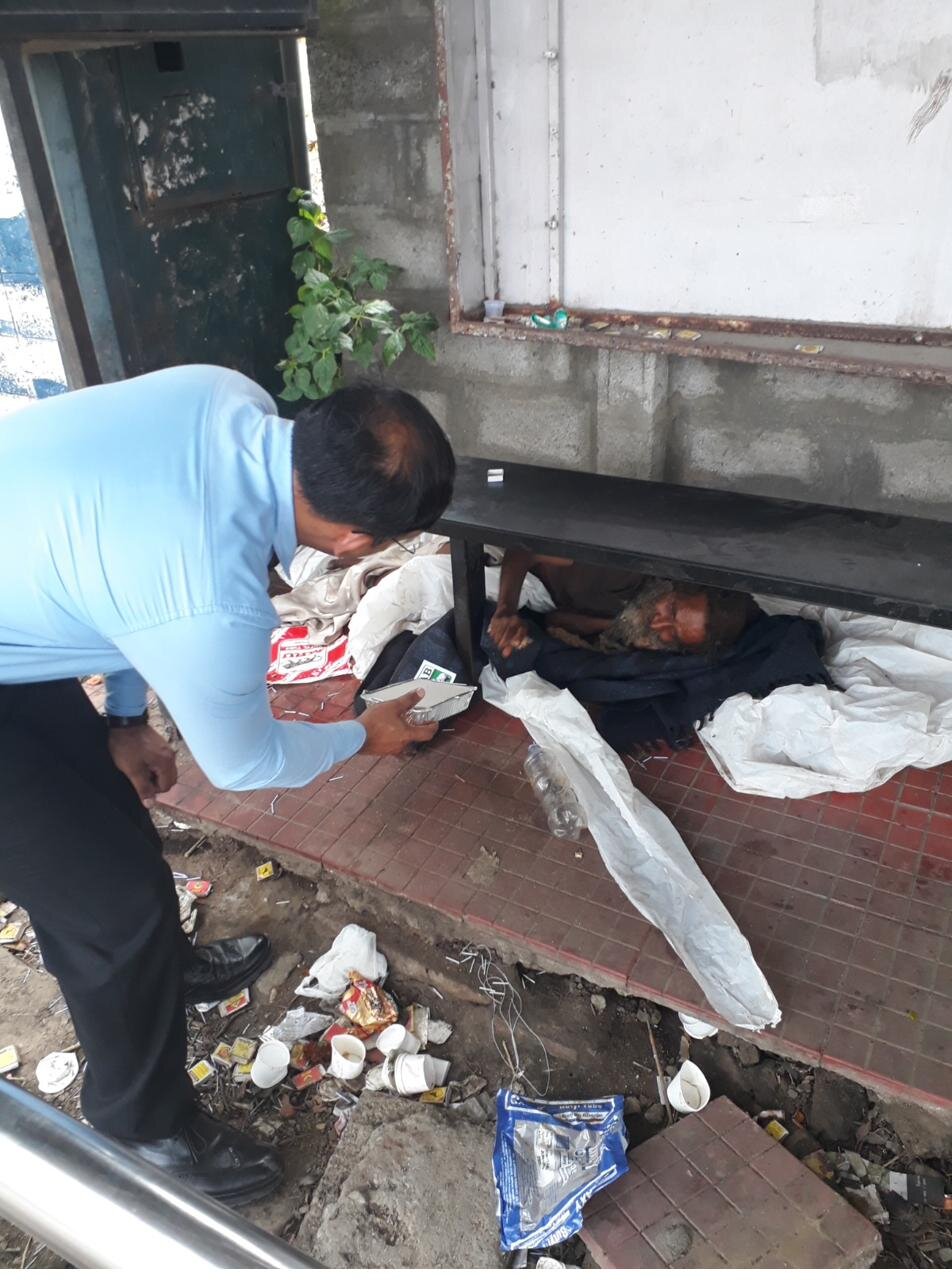
Field teams locate abandoned and neglected individuals across South Indian streets, footpaths, bus stands, and forgotten corners. We return, we earn trust, and when they are ready, we bring them in.
Bathing. Haircuts. Wound care. Medical attention. Hot food, clean clothes, a bed. The early days are the most fragile — and the most important. Care is given without conditions.
At our day centre in Kannur, elders arrive each morning to a room of familiar faces. Prayer, gentle exercise, music, meals, rest. In the evening, they return home. The loneliness lifts a little.
For those who remain in their own homes, we deliver food kits, medicine, and emergency aid. Sometimes a single visit prevents a person from becoming the next person on the street.
Where possible, we trace families and help reconnect. Where it is not, we become the family. We document each person not as a statistic, but as someone whose name we have learned.
III · A Story
Names are withheld to honour those we serve. The pictures are real. The journey is one of many.
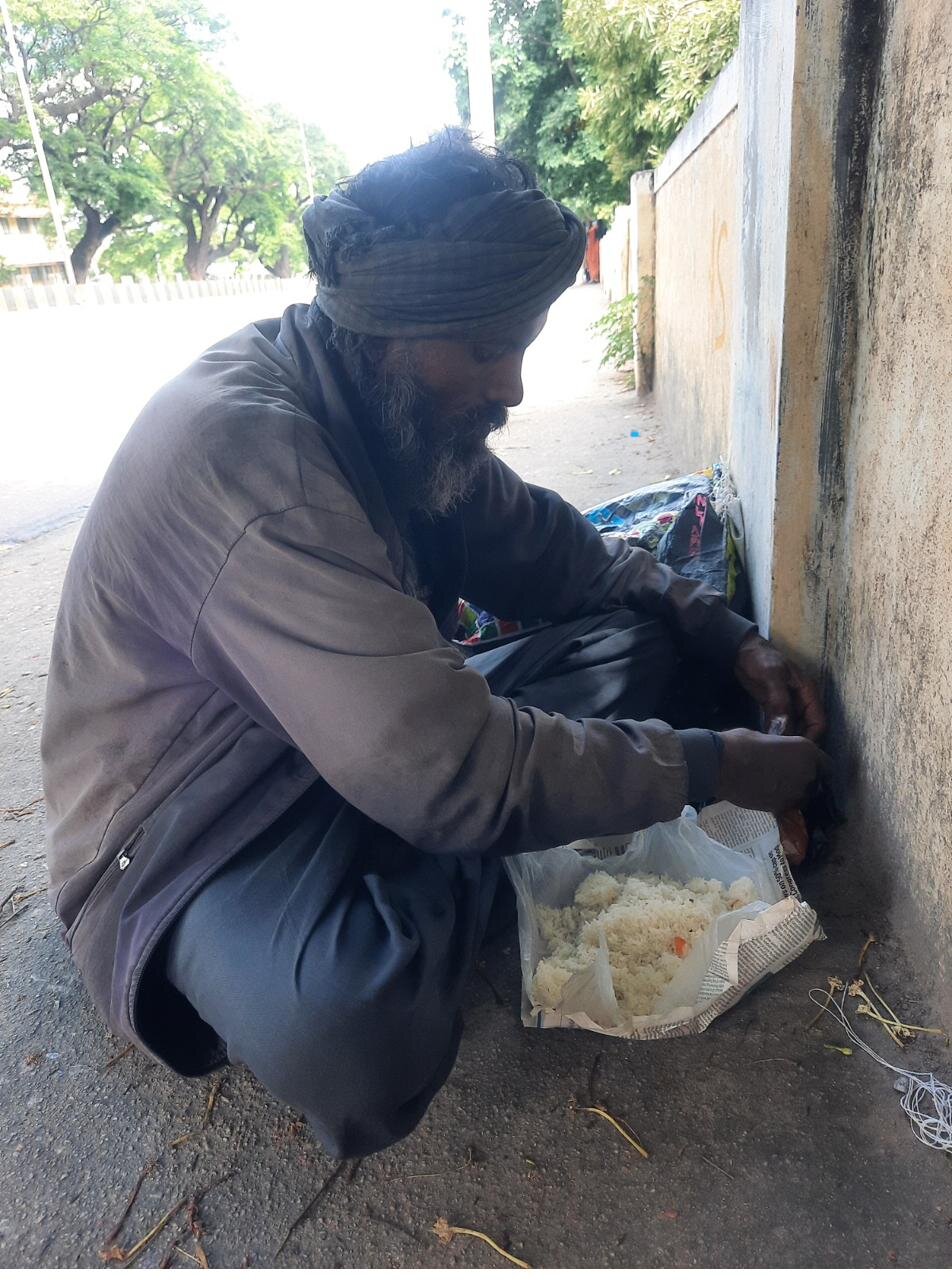
He had been at the same corner for weeks, eating what passers-by left behind, sleeping where he sat. People had stopped seeing him. We saw him, and we returned the next day. And the day after that.
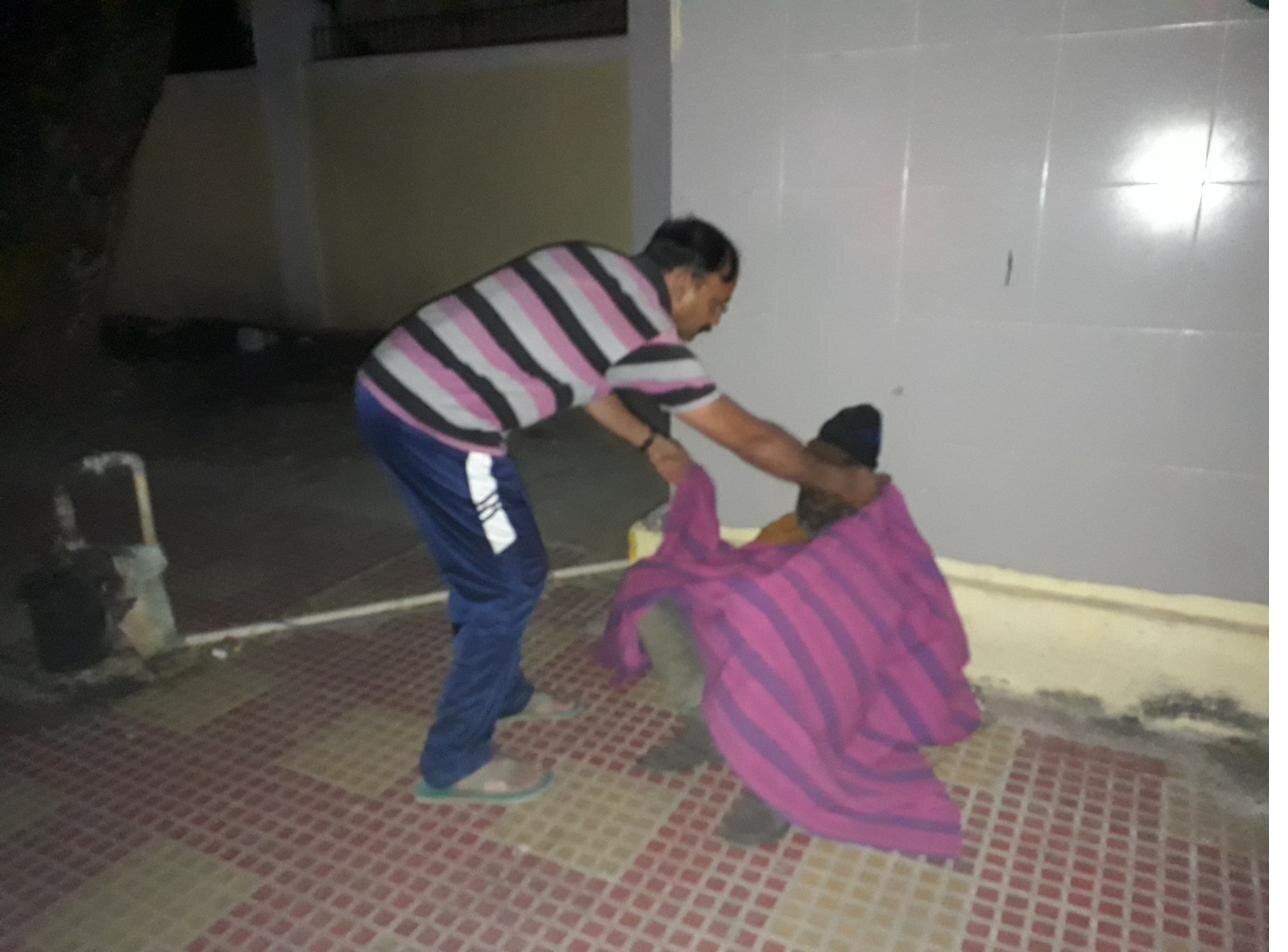
The first night, a blanket. The second night, a meal. The third, a name exchanged. Trust is built in the quiet hours, on the pavement, before any other care can begin.
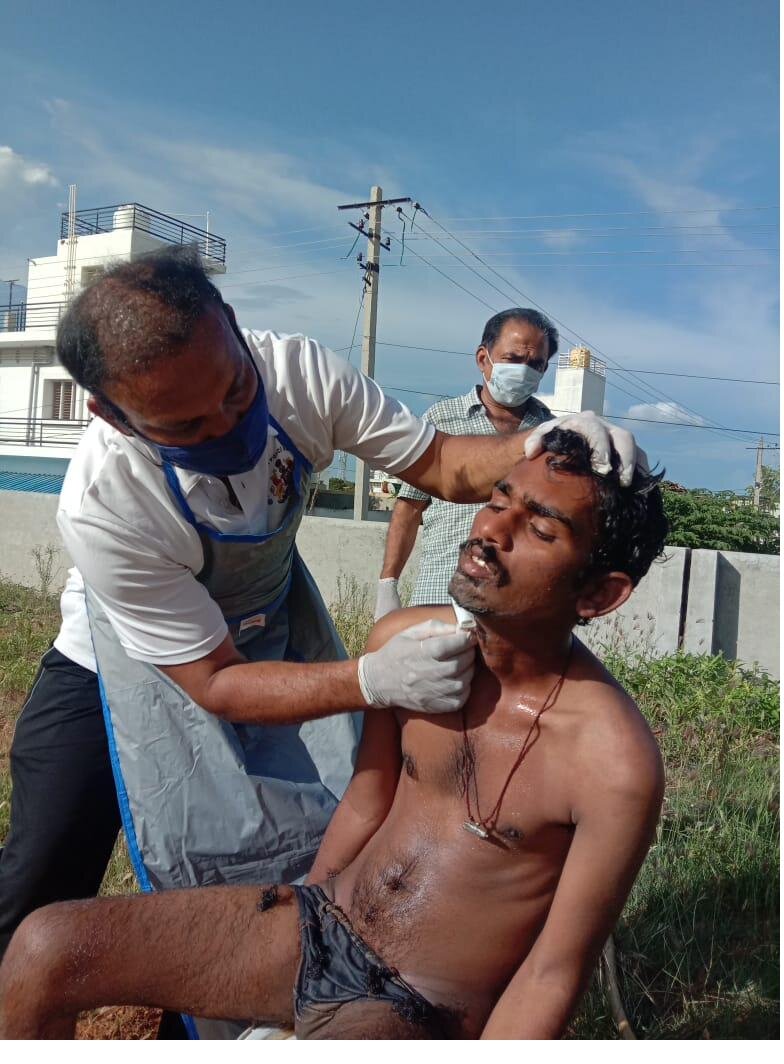
A bath. A shave. New clothes. The gestures are small. Their effect is not. To be touched with care, after months of being avoided, is a kind of homecoming the body remembers long before the mind does.
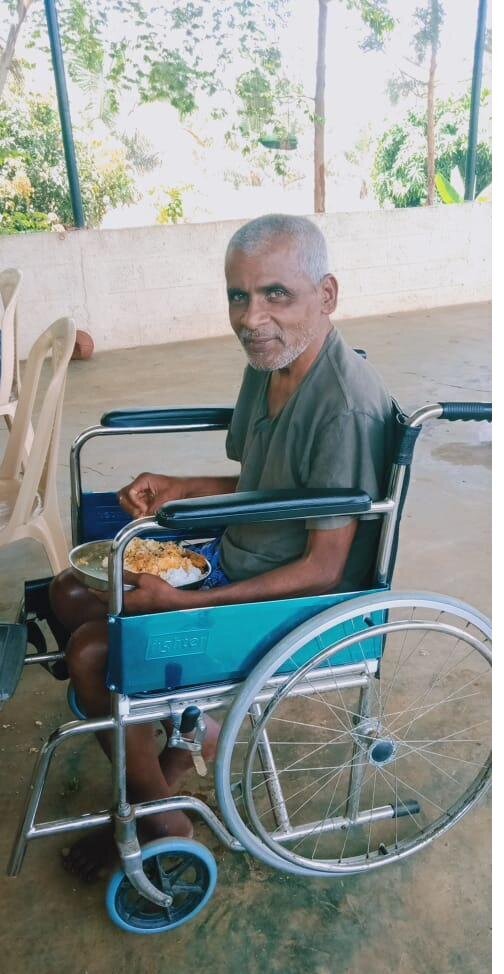
A roof. A wheelchair. A warm plate at noon. Companionship in the afternoon. The face that arrived hollowed by hunger begins, slowly, to fill back in. He smiles when we walk into the room. That is how we know.
IV · Since We Began
Numbers reflect work to date. Each one has a name.
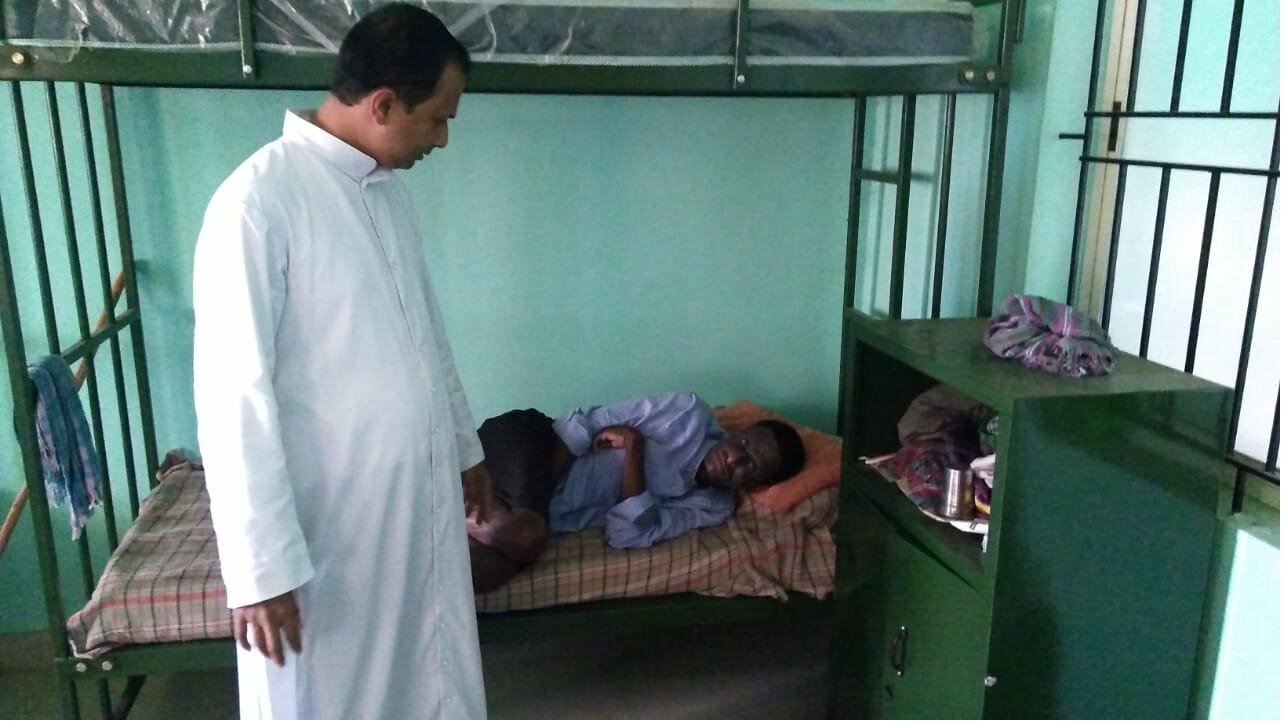
V · The Centre
In a quiet lane in Kannur, Kerala, the Karuna day centre opens its doors each morning before the heat sets in. Elders arrive — some on their own, some accompanied by family, some brought in by our team.
The day moves gently. Prayer for those who wish to pray. Light exercise. A shared meal. Conversation. Music in the afternoon. A nap when the body asks for one. In the evening, those with homes return to them. Those without stay with us.
“We do not rescue people from their lives. We help them return to them.”
VI · Volunteer
Karuna is sustained by the time of ordinary people. A morning a week. A skill you already have. A presence in the room.
Walk with our team. Help locate, approach, and earn the trust of those we serve.
Doctors, nurses, and paramedics — your time at the centre changes outcomes.
Sit. Listen. Read aloud. Play a game of carrom. Presence is the work.
Photographers, writers, designers, accountants, translators — every craft has a place here.
VII · Give
We publish what your contribution becomes. No vague pleas. No guilt. Only the work, and what it costs.
For international transfers and corporate partnerships, write to hello@karunaorg.com.